
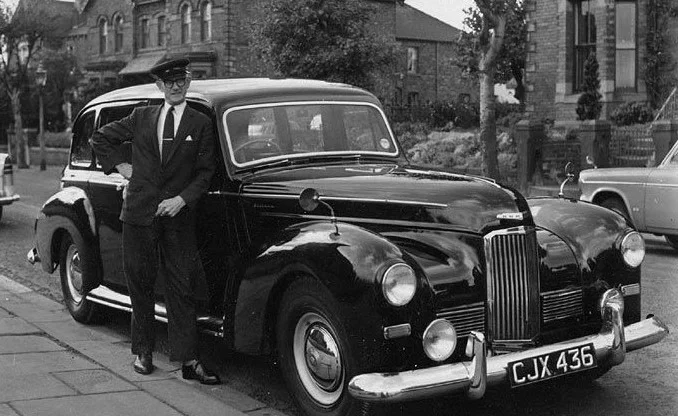
The word “chauffeur” comes from the French for stoker, the person who shovelled coal into a steam engine to keep it moving. It is a detail that tells you something important about the profession’s origins: it began not with elegance, but with engineering. The elegance came later, and it came quickly.
Ancient Roots: The First Professional Drivers
The concept of a skilled driver employed to transport someone of importance is as old as civilisation itself. In ancient Egypt, royal charioteers held positions of considerable military and social standing. They were not merely drivers but tacticians, responsible for manoeuvring war chariots at speed in battle conditions, a skill requiring years of training and exceptional physical strength.
In Rome, the auriga, the chariot driver, occupied a curious position in society. The most celebrated were enormously wealthy by the standards of any era, adored by crowds in the Circus Maximus in the way modern cities adore athletes. Gaius Appuleius Diocles, a Lusitanian charioteer who raced in Rome in the 2nd century AD, is thought to have earned the equivalent of several billion dollars over his career by some modern calculations. The driver as celebrity has a longer history than most people realise.
In Han Dynasty China, the imperial court maintained elaborate hierarchies of carriage drivers, with vehicle type and the number of horses indicating the rank of the passenger. A four-horse carriage was the exclusive privilege of the Emperor. The driver’s presentation and precision were understood as a direct reflection of imperial dignity, a principle that has not entirely disappeared from the profession.
The Age of Carriages: The Coachman’s Craft
As European cities grew in the 16th and 17th centuries, the horse-drawn carriage became the primary means of private transport for those who could afford it. The coachman, the predecessor of the modern chauffeur, emerged as a distinct and skilled profession. A good coachman was valued in a way that today’s best drivers still recognise: not primarily for speed, but for smoothness, reliability, and judgement.
The carriage vocabulary of the period is worth pausing on, because it reflects the nuance of the industry. The landau, developed in Germany in the 18th century, had a convertible top and was favoured for formal occasions and public processions. The barouche, with its facing seats, was the choice for leisurely social outings. The brougham, a lighter enclosed carriage named after Lord Brougham, was the everyday private carriage of the Victorian upper class. Each vehicle had its appropriate driver, its appropriate occasion, and its appropriate dress code. The idea that vehicle selection communicates something about the passenger and the purpose of the journey is not a modern marketing concept.
By the 18th century, the hackney carriage, a horse-drawn vehicle for hire by the general public, had become a fixture of London street life. The first licensing system for hackney coaches was introduced in 1662 under Charles II, making London’s regulated-for-hire vehicle industry one of the oldest in the world. The direct line between those 17th-century hackney coaches and the TFL Private Hire Licence that every Chauffeurz driver carries today is unbroken.
London’s licensed taxi and private hire industry is one of the oldest continuously regulated transport systems in the world. The first hackney coach licences were issued in 1662. The Knowledge of London test, required for black cab drivers, has been in place since 1865.
The Automobile Arrives: 1885 to 1914
Karl Benz patented the first petrol-powered automobile in 1885. Within a decade, wealthy Europeans and Americans were acquiring motor cars as novelties of engineering and symbols of modernity. The problem was that almost none of them could operate one reliably. Early automobiles required significant mechanical knowledge, they broke down frequently, had no self-starting mechanism before 1912, and needed to be managed with a competence closer to engineering than driving as it is understood today.
The early automobile chauffeur was as much mechanic as driver. He lived on or near the estate, maintained the vehicle, managed the fuel supply, and was expected to repair mechanical failures on the road. The term “chauffeur” became attached to this role because early steam-powered vehicles required someone to manage the boiler, the stoker, the chauffeur. By the time the petrol engine made steam obsolete, the word had already transferred to the driver-mechanic of the private motor car.
The social status of the early chauffeur was ambiguous and evolving rapidly. He was a servant, technically, but a servant with technical expertise his employer did not possess. He sat in front of the vehicle, exposed to the weather in the earliest open cars, while his employer sat protected behind. By the Edwardian period, this arrangement had begun to be seen as slightly incongruous, the professional driving the rich through rain while they sat dry, and enclosed driver’s compartments became standard on formal vehicles.
The Golden Age: 1920 to 1960
The interwar period was the golden era of the chauffeur-driven automobile, and it was defined by a convergence of three things: extraordinary vehicles, extraordinary wealth, and an extraordinary appreciation for the theatre of arrival.
The great coachbuilders of the 1920s and 1930s, Hooper, Mulliner, Gurney Nutting in Britain; Saoutchik, Figoni et Falaschi in France; Brunn in America, built bodies onto Rolls-Royce, Hispano-Suiza, and Duesenberg chassis that were as individual as tailored suits. A limousine of this period was not a production vehicle with a stretched wheelbase. It was a collaboration between an engineer and an artisan, often to the specific requirements of a specific client, and the chauffeur who drove it was expected to match its standard in every respect.
Hollywood consolidated the image. From the late 1920s through the 1950s, the studio system required its stars to arrive at premieres, award ceremonies, and public appearances in a manner consistent with the mythology being sold. The black limousine, the uniformed driver, the slow kerb approach, these became the visual grammar of celebrity. Fred Astaire, Marlene Dietrich, Clark Gable, and later Audrey Hepburn and Cary Grant arrived at events with chauffeurs who understood that they were not merely driving but staging an entrance. The skill of making an arrival look effortless, which requires considerable forethought, was prized then as now.
In Britain, the Royal Household maintained (and maintains) a fleet of state vehicles and a team of professional drivers whose standards set the benchmark for the entire industry. The Royal Mews at Buckingham Palace, which manages both the historic horse-drawn carriages and the modern fleet, has operated continuously since the late 18th century. The concept of a driver as the quiet, invisible professional who makes the important person’s day run without friction is entirely a product of this tradition.
The Profession Professionalises: 1960 to 2000
The post-war decades transformed chauffeuring from a purely private-household employment into an industry. As international business travel expanded, as commercial aviation made executive travel routine, and as London, New York, and Tokyo emerged as global financial centres, the demand for professional ground transportation grew faster than the supply of household-employed drivers could meet.
The executive car company, a professional firm offering chauffeured vehicles on a booking basis rather than household employment, became the dominant model. Companies serving London’s financial district, Heathrow’s growing international terminal, and the corridors of Mayfair and Belgravia established the operational formats that still define the industry today: fixed prices, fleet maintenance standards, driver background checks, and account management for corporate clients.
The Mercedes-Benz S-Class, introduced in 1972, became and remains the benchmark vehicle for the executive chauffeur market. Its combination of engineering refinement, rear passenger space, and brand recognition made it the default choice for professional operators worldwide. It remains the most recognisable chauffeur vehicle in London today, and for good reason: it has been earning that status for over fifty years.
Chauffeuring Today: Technology, Standards, and What Has Not Changed
The contemporary chauffeur industry in London is regulated by Transport for London, which requires Private Hire Vehicle licences for all operator vehicles and Private Hire Driver licences for all drivers, including enhanced DBS criminal background checks. The Knowledge of London, required for black cab drivers since 1865, remains one of the most demanding professional qualification tests in any field, a typical candidate studies for three to four years before passing.
Technology has changed the operational layer of the profession significantly. Real-time flight tracking, digital booking systems, GPS navigation, and instant client communication have compressed the logistical margin for error to near zero. A chauffeur meeting a client at Heathrow today knows the flight’s precise status, the terminal meeting point, and the fastest current route to the destination before the client’s plane lands. The information infrastructure supporting a professional transfer in 2026 would have seemed extraordinary to a 1960s operator.
What technology has not changed is what it was never going to change: the judgment required to read a client correctly in the first thirty seconds, the discretion required to manage sensitive information, the local knowledge that turns a route into a time saving, and the professional pride that produces a car presented to a standard the client notices even if they cannot articulate why.
The ride-hailing platforms that entered the market from 2011 onwards expanded access to on-demand private hire significantly, and they serve a genuine need. They did not, however, displace the professional chauffeur sector. If anything, they clarified it. The distinction between a dispatched-at-algorithm driver in a base-model saloon and a professional chauffeur in a prepared vehicle with full client briefing and local knowledge is visible to any client who has experienced both. The market for one has not shrunk because the market for the other exists.
Chauffeurz has operated in London since 2011
TFL Licensed Operator 010942. Fixed prices, professional drivers, meet and greet at every terminal. The same standard on every booking, from airport transfer to private day tour.
A Profession With Deep Roots and a Clear Future
From the charioteer of the Roman circus to the TFL-licensed professional meeting an arriving flight at Terminal 5, the thread running through the history of chauffeuring is consistent: the person who controls the vehicle and manages the journey is not a secondary figure in the experience. They are, at their best, the reason the experience is remembered at all.
Electric vehicles will replace combustion engines across the professional fleet in the coming decade. Autonomous vehicles will change elements of urban transport. Neither development will make the professional judgment, local knowledge, and client-reading ability of an experienced chauffeur redundant. The technology changes. The service does not.
London has been moving its most important passengers through its streets, in one vehicle or another, for two thousand years. The standard being maintained today is the same one the first professional drivers understood: the person in the back of the vehicle trusts you with their time, their safety, and on occasion their reputation. That trust is the job.
